
Feature
Reading Material for Emigrants
❦
Having the last name of Brewster, November makes me think of Thanksgiving since William Brewster, my husband’s 13th great grandfather, was the minister on the Mayflower. I have wondered what books the Pilgrims brought with them.
More pertinent to Crossing the Plains that was released in November, what books did Latter-day Saints have in 1862? Emma went to a private school and was among the 65% of women in England who could read.
It was that equality that we celebrate every November that allowed families like Emma’s to emigrate to a better life.
Their main reading material, of course, was the Bible. More on that in a minute. They also read the Millennial Star, the Church’s 16- page periodical, which was published every other week. The Star gave advice to emigrants, sermons and mission information, and helpful tips on shoe blacking, willow bark tea, and useful concoctions for one’s health.
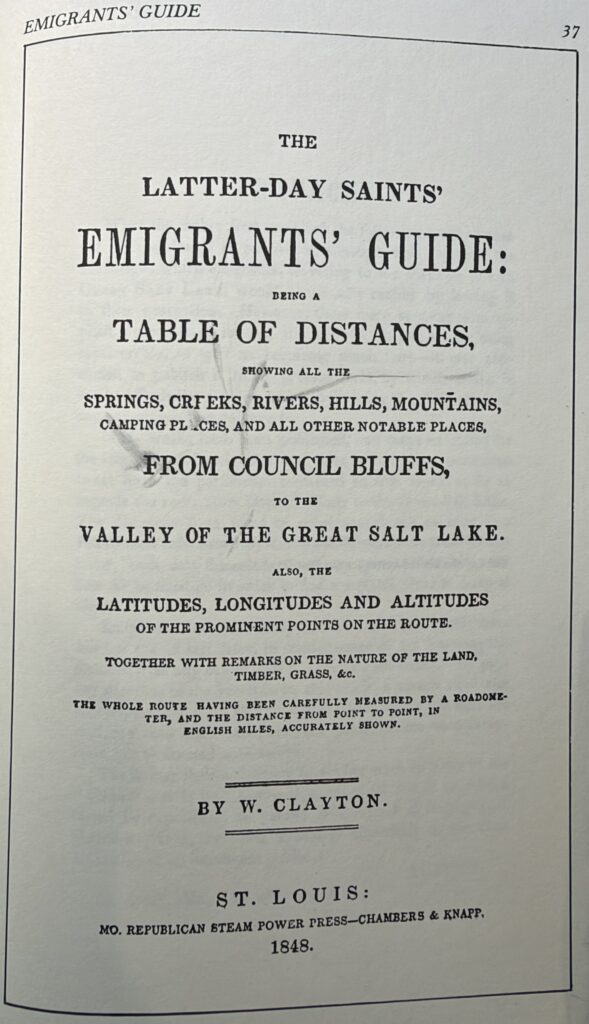
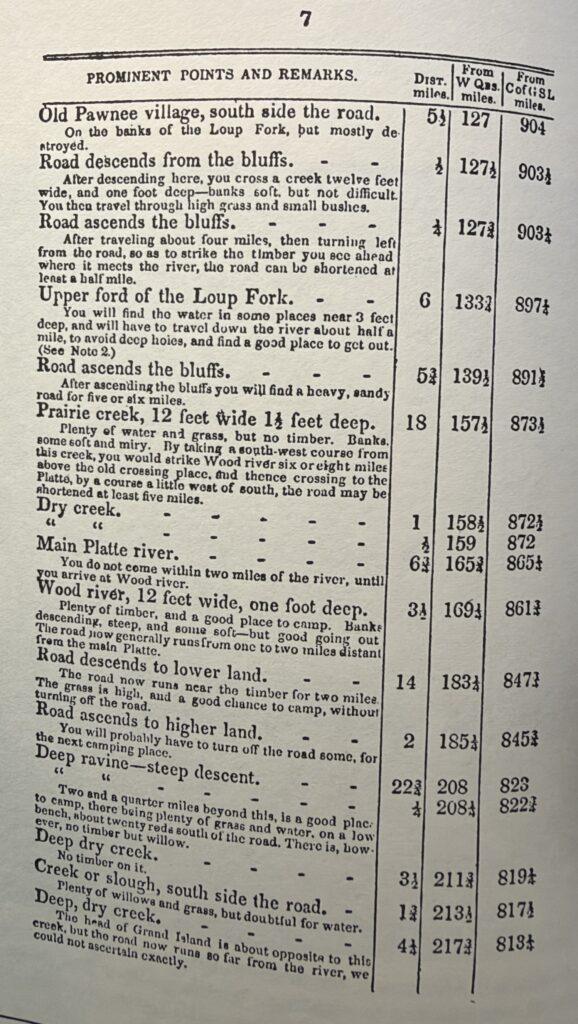
The Emigrants’ Guide was a booklet by William Clayton that gave mileage between watering and camping locations, as well as elevations and distances. It was such a well-put-together guide, that many other people plagiarized it.
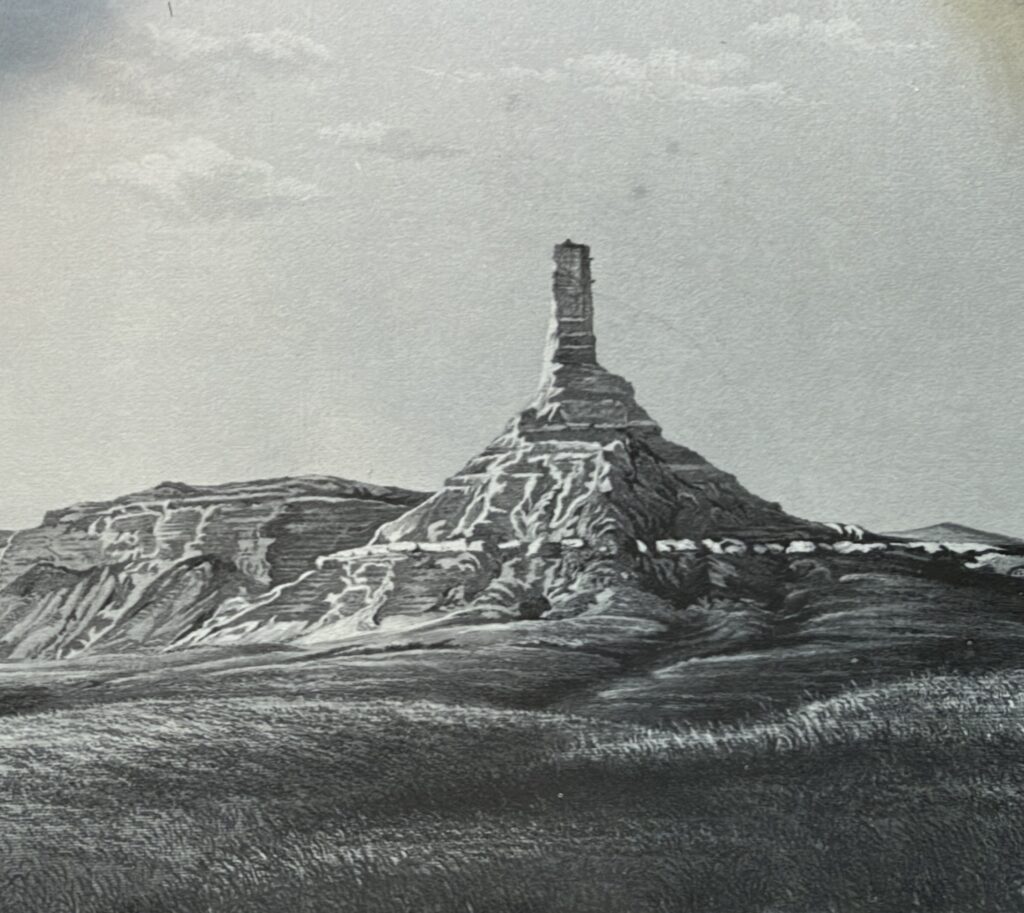
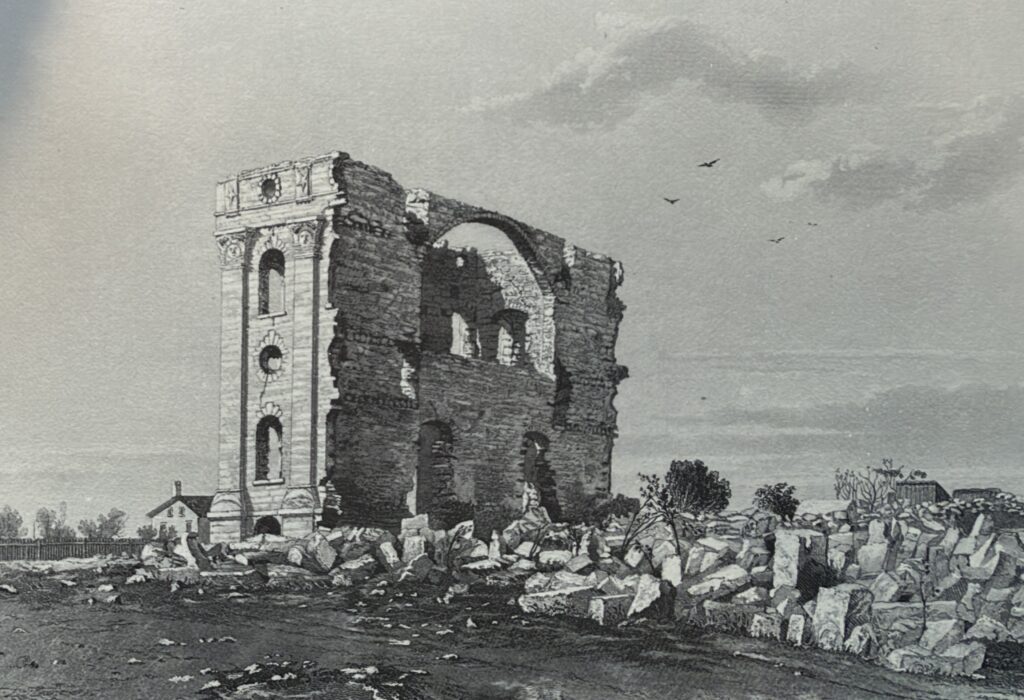
The Route from Liverpool to Great Salt Lake Valley contained drawings by Frederick Piercy. When Samuel Whitney Richards was the mission president in England, he felt immigrants would be helped by picturing the route. He had English artist Piercy walk the trail in 1854, going both west and east from Salt Lake City, sketching notable places along the Mormon Trail, like Chimney Rock and Devil’s Gate as well as lush campgrounds and rivers. Some of his drawings became famous, such as his view of the ruined Nauvoo Temple.
Fairytale volumes could be found in wealthy homes like Emma’s. They could have had French tales by Charles Perrault, German tales by the Brothers Grimm, and English tales by Charles Kingsley. More familiar, though, were Mother Goose rhymes, which had already been in print for a century by the time Emma was old enough to read.
❦
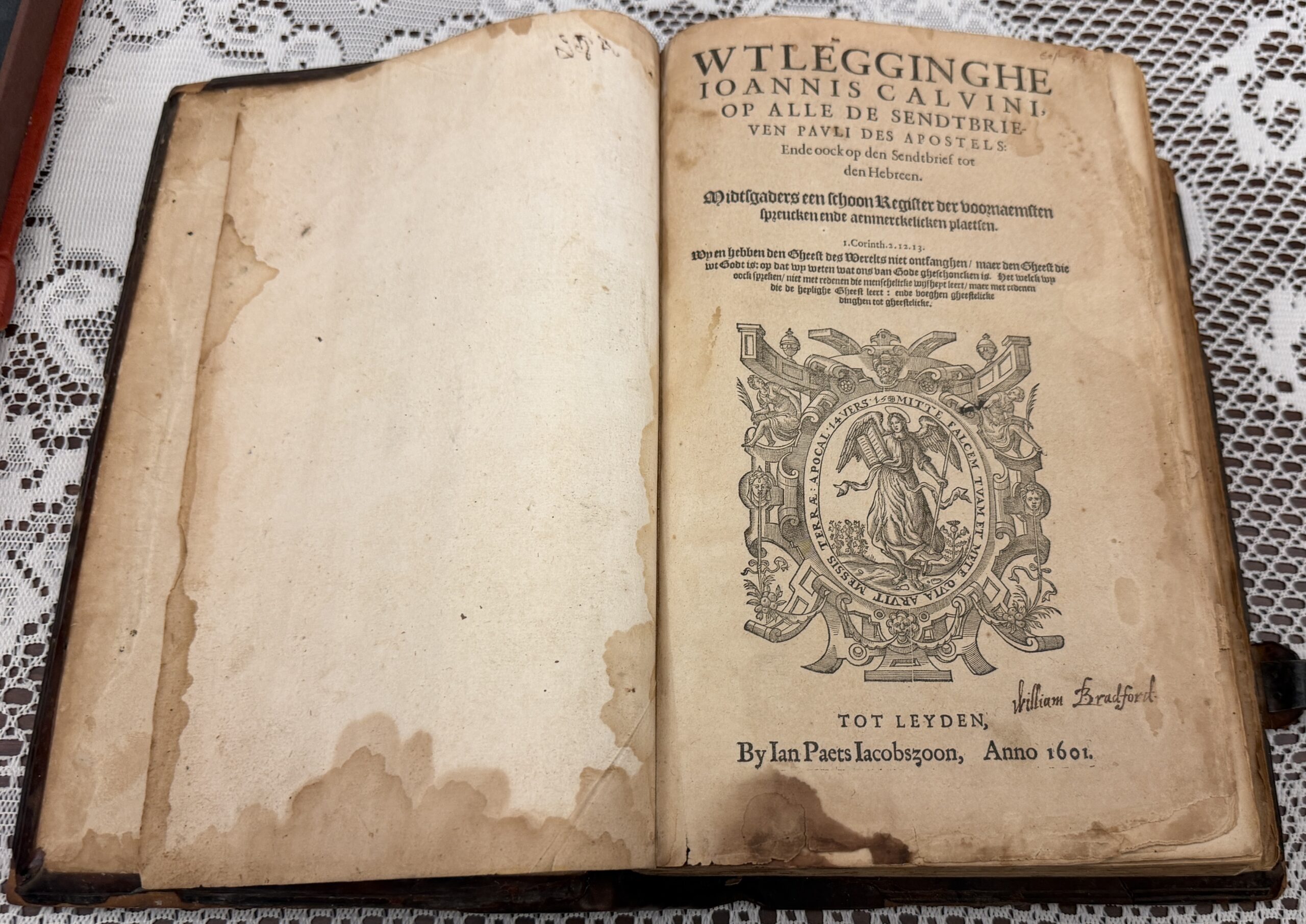
Back to the Bible: the first English Bible was brought to the New World by William Bradford aboard the Mayflower in 1620. It was a New Testament nearly 2½” thick and was printed in two volumes: Matthew through Acts, and Romans through Revelation. It was a Calvinist version written in Dutch, with sometimes just one verse on a page, and the rest of the page Calvinist commentary. Other books on the Mayflower were pocket-sized psalters and hymnals brought by William Brewster and military manuals and books on defense and fortification brought by Myles Standish.
And of course, the Pilgrims had quills and blank paper on which they wrote the Mayflower Compact, that first document that forged equality in America. It was that equality that we celebrate every November that allowed families like Emma’s to emigrate to a better life.